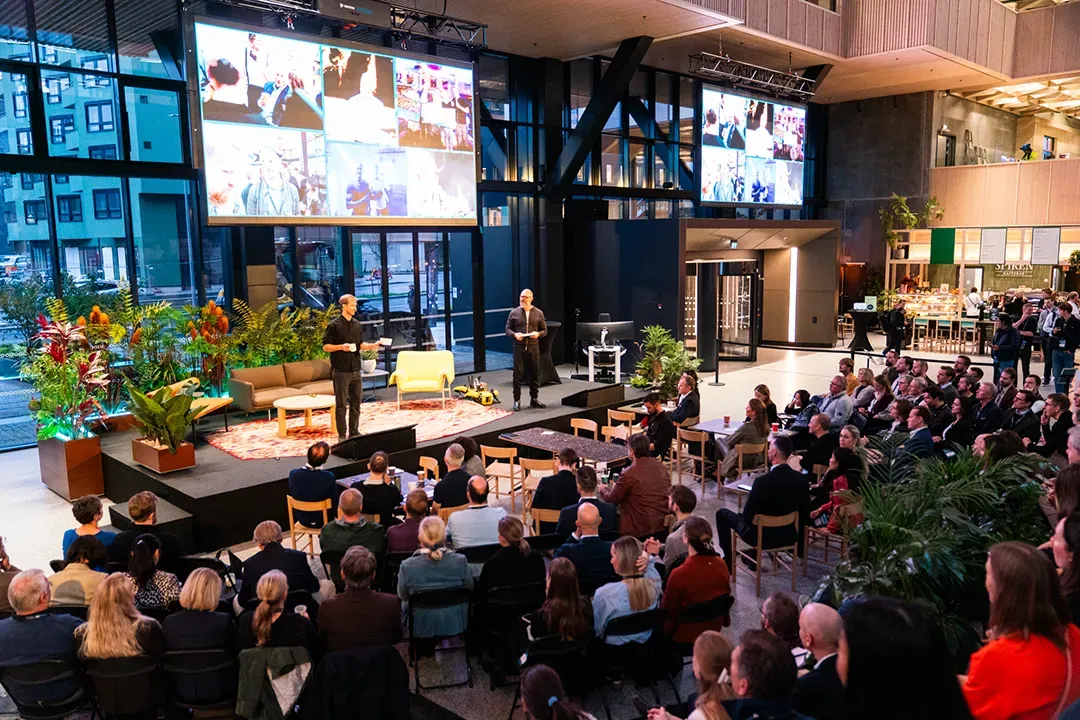


Case Studies: What Will Buildings Do For Us?


Six companies. Six answers.
Buildings have always been passive: we design them, build them, then adapt to them. Software, data and AI har begun to reverse that relationship. Four companies get four minutes each to answer: How does AI and data-driven software change the role buildings play in our lives?
Life@Work: The building as a service.
Awaio: The building that adapts to how we use it.
Visoid: When we can see the building before we decide.
Plaace: The building that understands its neighbourhood.
Adaptive Recognition: The building that knows who belongs.
bGrid: The building that learns how we live and work.
Schedule
11:10–11:14Life@Work: The building as a service Atle Olsen
Life@Work already puts access to rooms, desks, food, fitness, parking, communication, and building services into one interface. Their question is what happens as that interface becomes intelligent: can the building begin to understand what you need rather than waiting for you to navigate it?
11:14–11:18Awaio: The building that adapts to how we use it. Björn Kjellgren
Bookings, access and resource use create a live picture of how workplaces are occupied. Awaio shows what happens when buildings are increasingly configured around observed behaviour rather than fixed assumptions about how many desks, rooms, lockers and square metres people need.
11:18–11:22Visoid: When we can see the building before we decide Mark Szoke
Visoid uses AI to turn architectural models and sketches into visualisations in seconds and rapidly test materials, lighting, seasons and design alternatives. Their angle is how cheap, near-instant visualisation changes who gets to understand, test and influence a building before it exists.
11:22–11:26Plaace: The building that understands its neighborhood. Snorre Jordheim Myhre
Plaace combines movement, demographics, spending, competition and other location data to understand how places actually function. Their question can move beyond site selection: what happens when buildings and neighborhoods are programmed around evidence of who is there, when they come, what they need, and what is missing?